
The $800 That Changed Everything: Why RiseMore Won't Publish Without You
A founder lost $800 in 48 hours to a freelancer's error. That story became the design specification for an AI marketing agent — and it's why RiseMore won't publish a single word without your approval. The architecture decision that separates tools founders trust from tools they abandon.

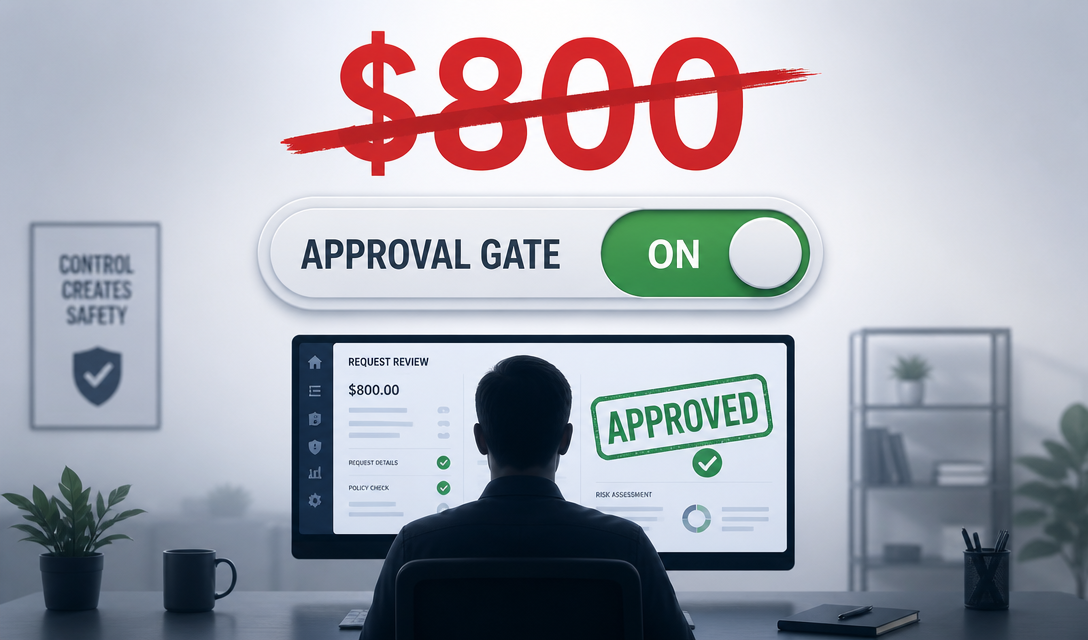
A founder lost $800 in 48 hours. Not to a bad ad campaign. Not to a pricing mistake. A freelancer they trusted with their budget made one wrong move — a bidding error — and real money disappeared before anyone could stop it. I read the story on Indie Hackers last week, and it's stuck with me since.
That story didn't just terrify the founder who lived it. It became the design specification for an entire AI marketing agent.
MarketSquad, an autonomous marketing platform for bootstrapped founders, interviewed over 40 founders before writing a single line of code. They kept asking the same question: what would make you actually trust an AI to handle your marketing?
The answers changed how I think about building RiseMore.
What 40 Founders Actually Wanted
The founders didn't ask for more speed. They didn't ask for the AI to do more things without them.
They asked for the ability to say no.
Every founder had a version of the same fear: an autonomous system spending money, publishing content, or making strategic decisions they couldn't reverse. The $800-in-48-hours story was the most visceral expression of a universal anxiety.
The insight that shaped MarketSquad's architecture was simple: safety over speed. Trust had to be engineered into the product at the architectural level — not treated as an objection to overcome in the sales copy. Hard budget caps the AI couldn't cross by a single dollar. Kill switches. Visibility into every action. And most importantly: approval gates that let founders stop the AI before it acted.
This reframes a core assumption the AI industry keeps getting wrong. Approval gates aren't a UX compromise you grudgingly add. They are the primary reason founders adopt the tool in the first place.
The founders MarketSquad interviewed saw approval gates as "proof they could stop the AI." Not friction. Safety.
The Architecture Decision I Made for RiseMore
When I built RiseMore's publishing workflow, I faced the same decision. The default for "autonomous" is simple: AI generates content, AI publishes it, you check the dashboard later to see what went out.
I built it the other way.
Every post RiseMore generates sits in a review queue. You inspect it. You edit it. You approve it, reject it outright, schedule it for later, or publish it now. Nothing — not a single tweet, not a LinkedIn post, not a blog article — leaves the platform without your explicit approval.
This wasn't a technical limitation. RiseMore could auto-publish. The engineering cost of adding an approval layer was higher than shipping without one.
The decision came from the same place MarketSquad's did: I'd read enough founder postmortems to know that the moment you lose trust in an automated system, you stop using it permanently. The $800 freelancer error isn't a one-off horror story. It's the extreme end of a spectrum every solo founder lives on, where one wrong move — a badly timed post, a tone-deaf message, a claim that doesn't land — can cost you reputation you spent months building.
Why This Matters More in August 2026
The platforms themselves are now enforcing this distinction.
In the past month alone, Snapchat announced it would stop recommending "wholly AI-generated" videos. YouTube tightened monetization rules against "generic, repetitive AI content." Substack launched a dedicated tool to flag AI-written newsletters. And LinkedIn — most consequentially — added a "Seems like AI slop" reporting button to every post, with its CPO publicly stating that AI content quality is "a top priority for all of us."
The pattern across every major distribution surface is the same: AI-assisted human creation is fine. Fully automated AI publishing is getting deprioritized, buried, or actively penalized.
RiseMore's approval-first architecture wasn't built to comply with these policies — most of them didn't exist when I designed the workflow. But they validate the same principle that 40 founders told MarketSquad months ago: the human decision at the end of the pipeline isn't optional. It's the thing that makes the output trustworthy.
Trust as Architecture, Not Messaging
The AI marketing tools that will still matter at the end of 2026 aren't the ones that promise the most automation. They're the ones that earn trust through visible, verifiable decision gates.
When a RiseMore user hits "approve" on a post, they're not just clearing a queue item. They're exercising the judgment that no language model can replace — the final call on what their product, their voice, their reputation says to the world.
The $800 lesson is simple, and it applies to far more than budget caps. Build trust into the architecture — the actual control flow of the product — not just the marketing page. Your users will feel the difference. And increasingly, the platforms they publish on will punish them if you don't.
Share this
Written by Edward New
shenjian8628@gmail.com